Custom Posters
Print one, or print a few hundred
A poster is the only product most people will hang on a wall and look at every day without being asked to. That makes it worth more than the paper it is printed on, and it is why coaches, educators, and authors keep turning content they already own into something a customer wants in the room with them.
We print 11 x 17 posters on demand with no minimum, so you can order a single copy. Larger sizes, up to 36 x 48, are produced in small batches on paper stocks or on styrene. That difference matters more than it sounds, so it is worth understanding before you pick a size.
Two Ways We Print Posters
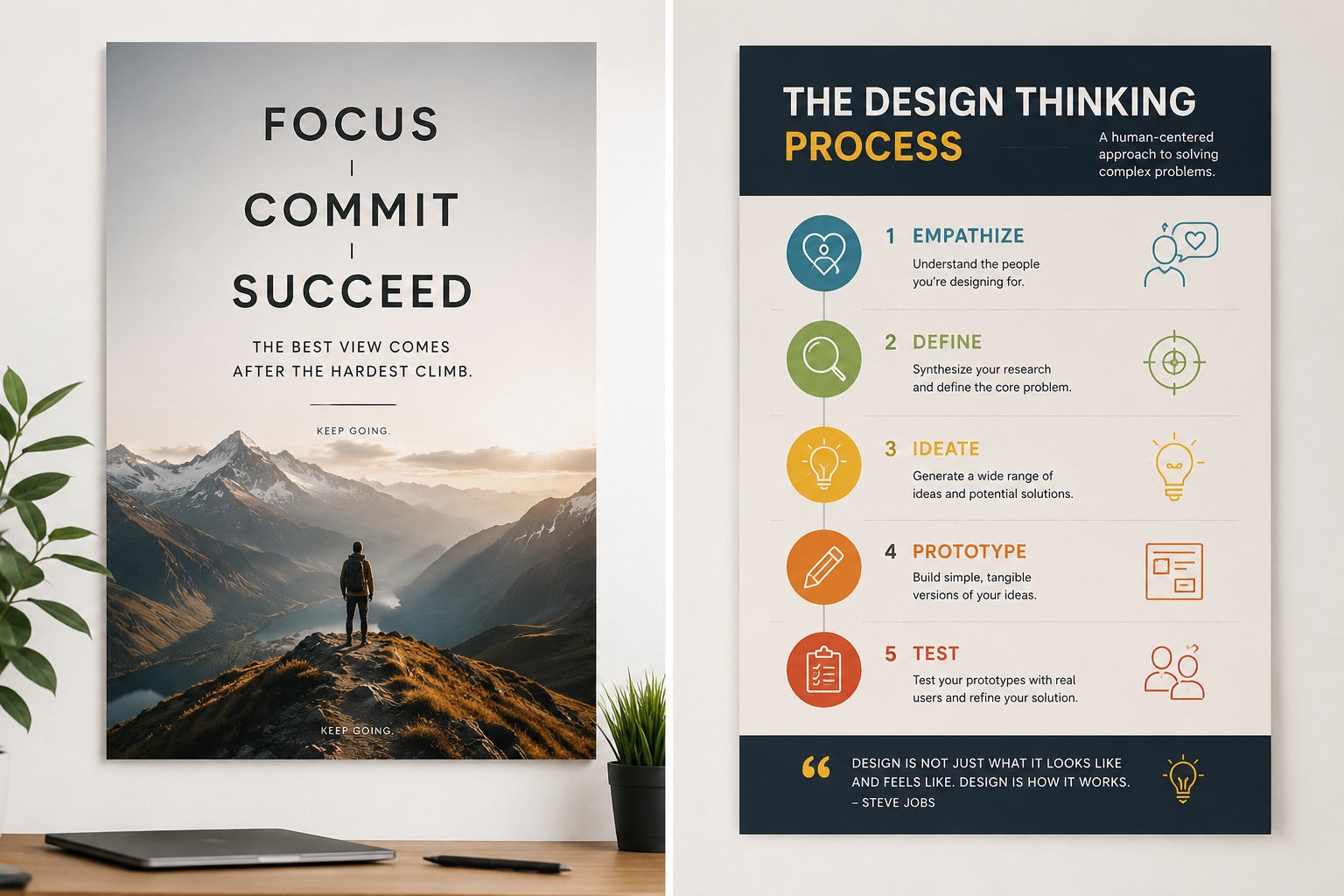
11 x 17, printed on demand
No minimum and no inventory. Print a single copy to see it, then print more only when someone orders. If you sell your poster from your own site, we can print and ship each one as the order comes in, so you never buy stock you have not sold. It is also a standard frame size, which matters if your buyer intends to hang it.
Up to 36 x 48, printed in batches
Bigger posters are produced as a run rather than one at a time. You get real wall presence, a wider choice of material including styrene, and you hold the finished quantity as inventory. We can warehouse the run and ship from it, so the batch does not have to live in your garage.
Start small if you are testing. An 11 x 17 costs you nothing to try, because you can print one. Going straight to a large batch of an untested design is where people lose money on this product.
Choosing a Size
If you are selling the poster, size affects more than impact. It decides whether your buyer can frame it easily and what it costs you to ship.
| Size | How it prints | Worth knowing |
|---|---|---|
| 11 x 17 | On demand, no minimum | A standard frame size, so a buyer can pick one up anywhere. The safest choice for a poster you intend to sell. |
| 18 x 24 | Small batch | The most common poster size in the US and easy to frame. A good choice once a design has proven it sells. |
| 24 x 36 | Small batch | Full wall presence for events, studios, gyms, and classrooms. The size people picture when they hear the word poster. |
| Up to 36 x 48 | Small batch | Our largest. Big enough to work as a planning wall, a project tracker, or a year at a glance calendar. Best on styrene at this size. |
| Custom sizes | Small batch | Anything up to 36 x 48. Tell us the dimensions and we will quote it. |
Frames are worth thinking about early. 11 x 17, 18 x 24, and 24 x 36 are all standard frame sizes in the US, so a buyer can pick one up anywhere. A custom size will look exactly how you want it and will be harder for your customer to frame. If the poster is decor someone hangs at home, stay on a standard size.
Fold-Out Posters Bound Into a Book
A poster does not have to be a separate product. An 11 x 17 sheet can be printed, folded to 8.5 x 11, and bound directly into a spiral bound book, so the full size sheet lives inside the book and opens out to twice the page size.
This is common in training manuals, and it solves a problem every workbook author eventually hits. A process diagram, a framework, an org chart, or a year at a glance layout does not fit legibly on a standard page. Rather than shrinking it until nobody can read it, or splitting it across a spread with the binding running through the middle, you print it at full size and fold it in.
The bound-in sheet can also be perforated, so a reader can tear it out cleanly and put it on a wall while the rest of the book stays intact. That gives you a workbook and a poster in a single product, with no second shipment. See our perforating options for how that works.
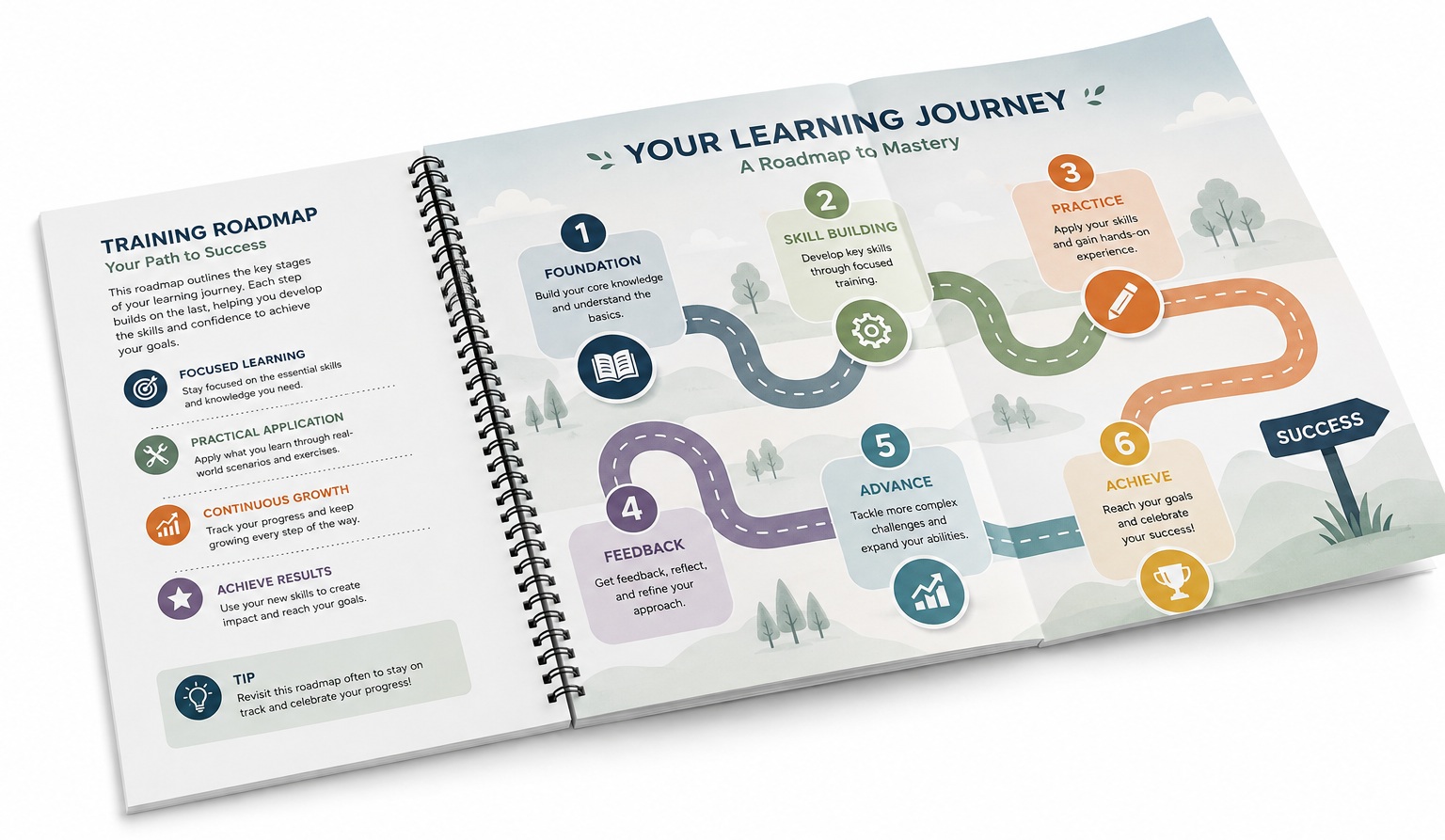
Worth considering before you lay out a manual. If your book has one page that people photograph and pin up, that page is a fold-out candidate. It costs far less than producing and shipping a separate poster, and it arrives already attached to the material that explains it.
Fold-outs work with spiral and wire-o binding, both of which lay flat so the sheet opens fully without fighting the spine. See spiral bound books for binding details, and tell us at quote time which pages should be fold-outs and whether you want them perforated.
Paper and Material
The stock does as much work as the artwork. A framed art print and a poster taped inside a gym want completely different material, so it is worth picking deliberately rather than taking a default.
100# Gloss
A coated paper with a shine that makes color and photography look rich and saturated. Flexible rather than rigid, and the most economical of our options. Best for artwork, photography, and anything displayed for a season rather than kept for years.
12pt to 18pt Cover Stock
Card stock, in three weights. It is rigid enough to stand on its own, will not curl in a frame, and feels like a product rather than a handout. 12pt is the lightest, and 18pt is the most substantial. If you are selling the poster at a real price, this is the range to be in.
Styrene, for larger posters
A lightweight plastic rather than a paper. It resists creasing and tearing, holds up to daily handling, and takes dry erase markers, so the poster becomes a working surface instead of a reference. Available on larger sizes, and the material we would recommend at 36 x 48. Ideal for classrooms, gyms, clinics, and anywhere a chart gets used rather than admired.
All three paper stocks are available on the larger batch sizes as well, so choosing a big poster does not force you onto a heavier or more expensive material than your project needs.
A quick way to choose. Photography and artwork are usually happiest on 100# gloss. Anything a customer buys and frames belongs on cover stock. Anything that gets written on, wiped down, or handled every day should be styrene.
What Our Customers Print
Frameworks and Roadmaps
Your method, your model, or your process laid out as one visual. If you teach a framework, a poster puts it on a client wall where it keeps working between sessions. This is the single most common poster our customers sell.
Program and Course Support
A tracker, a habit chart, a practice schedule, or a reference sheet that belongs on a wall rather than in a binder. A natural companion to a workbook or planner your customers already have.
Classroom and Training Room
Anchor charts, procedure references, vocabulary walls, and safety or process reminders. Educators buy in sets, so a poster series often sells better than a single design.
Affirmations and Quote Art
A low cost entry product for an audience that already follows your writing. Works especially well as a set, since a buyer who wants one often wants three.
Event Handouts and Signage
Live event takeaways, book signing bonuses, workshop handouts, retreat signage, and trade show displays. Print exactly the quantity the room needs.
Training Manual Fold-Outs
A full size diagram or framework folded and bound into the manual itself, perforated so a trainee can tear it out and keep it at their desk. No separate product to sell, ship, or track.
Project and Progress Tracking
A wall sized tracker that a team or a client actually writes on. Printed on styrene at 36 x 48, it becomes a reusable planning surface rather than something that gets replaced every quarter.
Wall Calendars
A full year on one surface, at a size you can see from across the room and write on with a dry erase marker. If you want a bound or hanging calendar instead, see our custom calendars.
Infographics and Data
Anything with enough detail that a screen cannot hold it comfortably. Gyms, clinics, offices, and studios all use wall sized reference material daily.
Shipping and Fulfillment
Posters are rolled and shipped in tubes. A tube protects the print far better than a flat envelope, which is why it is the standard for this product, but it does mean a poster travels as its own parcel rather than tucked in alongside something else.
That is worth planning for if you sell more than one product. A customer buying a poster and a book from you is receiving two shipments, not one, so price and describe the poster accordingly rather than treating it as a free add on.
If you are selling posters, we can handle the whole back end. We store your printed run, and when a customer orders, we pick, pack, and ship it under your branding. You never handle a tube yourself. See warehousing and fulfillment for how that works.
Preparing Your Files
We print from your print ready files. We do not create or edit artwork, so your file needs to arrive finished, at the correct trim size, with the right bleed and resolution.
Resolution is where poster files go wrong most often. An image that looks sharp on a screen is being viewed at a few inches wide, and the same file at 18 x 24 can look soft. Build your artwork at full size rather than scaling a smaller file up, since enlarging a low resolution image does not add detail back.
Full requirements are on our print specifications, and templates for many of our products page. If you are ordering a batch of a larger size, order a printed proof first.
Frequently Asked Questions
What is the largest poster you can print on demand?
11 x 17 inches, with no minimum. Larger sizes are produced in small batches rather than one at a time.
What is the largest poster you can print at all?
36 x 48 inches. At that size we would usually recommend styrene, which holds up to handling and takes dry erase markers.
Is there a minimum order for posters?
There is no minimum at 11 x 17, so you can order a single poster. Larger sizes are printed in batches, and we will quote the quantity that makes sense for your project.
What paper can posters be printed on?
100# gloss for rich color at the lowest cost, or 12pt to 18pt cover stock for a rigid poster that holds up in a frame. Larger posters can also be printed on styrene.
What is styrene, and why would I use it?
Styrene is a lightweight plastic that resists creasing and tearing and takes dry erase markers. It suits posters that get handled, written on, and used daily rather than simply displayed, such as project trackers and wall calendars.
Should I choose gloss or cover stock?
Gloss makes photography and artwork look richer and costs less. Cover stock is rigid, will not curl in a frame, and feels like a product, which matters if you are selling the poster.
Can a poster be bound into a book?
Yes. An 11 x 17 sheet can be printed, folded to 8.5 x 11, and bound into a spiral or wire-o book, so it opens out to twice the page size. This is common in training manuals.
Can a bound-in fold-out be removed from the book?
Yes, if you have it perforated. The reader can tear the sheet out cleanly and display it while the rest of the book stays intact.
How do posters ship?
Posters are rolled and shipped in tubes, which protects the print in transit. A poster ships as its own parcel rather than packed in with other products.
Can you store and ship posters to my customers?
Yes. We can warehouse your printed run and ship individual orders to your customers under your branding, so you never handle inventory.
Do you design the poster for me?
No. We print from your print ready files. You supply the finished artwork and we handle printing, packing, and shipping.
Ready to Print Your Poster?
Whatever stage you are at, here is where to start.