Foil Stamping, Embossing & Debossing for Custom Planners, Books & Journals
Three techniques that turn a flat cover into a tactile experience.
Customers form an impression of your product in the first second they pick it up, before they have read a single word. The cover is doing all the work in that moment. Foil stamping, embossing, and debossing are three of the most effective ways to make sure that first second tells the right story.
All three techniques add texture and depth to your cover, but they do it in different ways. Foil stamping adds visual color and shine. Embossing pushes the design up off the surface. Debossing presses it down into the material. The right choice depends on the look and feel you want, and many of the best-designed products use more than one.
Foil Stamping
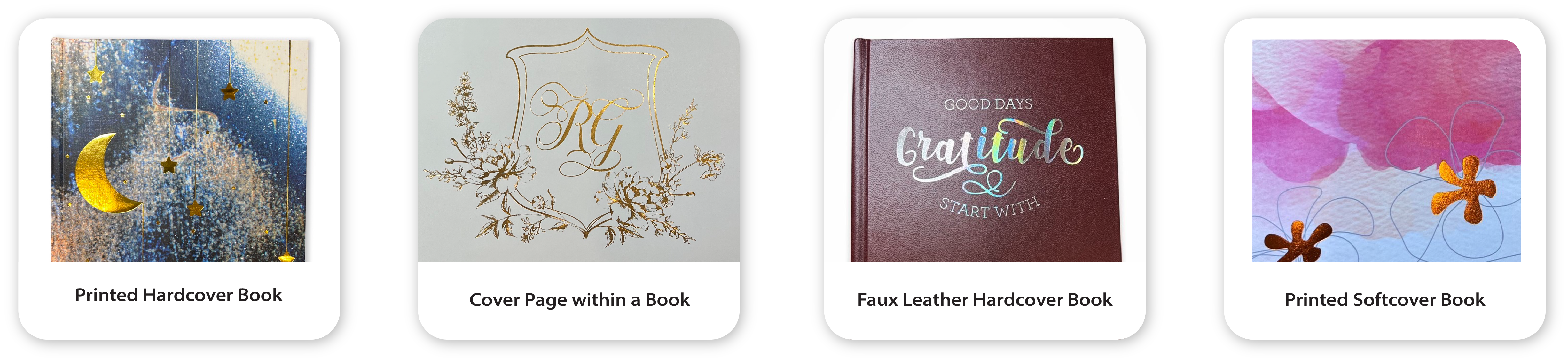
Foil stamping uses heat and pressure to apply a metallic or pigmented foil to your design. We offer more than 50 foil colors, including classic gold and silver, matte and gloss versions of most colors, holographic, and specialty finishes that catch and play with light. The result is a striking, high-end look that draws attention to titles, logos, and the design elements you most want customers to notice.
Foil works on most cover materials, including faux leather, linen, printed hardcover, board covers, and softcover stocks. The right foil color depends on your cover material and the impression you want to make. Gold on navy reads as classic and authoritative. Holographic on black reads as modern and bold. Rose gold on cream reads as soft and refined.
Embossing
Embossing creates a raised design that lifts elements off the surface of the cover, adding dimension and a tactile feel customers want to touch. The raised area picks up light and shadow, which gives the design a quiet sense of luxury without adding any color or finish.
Embossing is commonly used on dust jackets, paperback covers, and certificates where a raised effect enhances the presentation. It works well on its own or in combination with foil stamping, where the foil is applied to the raised area for a layered, dimensional effect.
Debossing
Debossing creates a recessed impression pressed into the material. The design sinks slightly below the surface, creating a subtle, sophisticated look that feels both durable and refined.
We most often deboss directly into hardcover materials such as faux leather and linen, where the recessed impression catches the natural texture of the material in a way that feels expensive and considered. Debossing tends to read more upscale than embossing, which is why you see it on premium journals and high-end planner brands.
Combining and Layering Techniques
You do not have to pick just one. Some of the most striking covers we produce combine these techniques together. A debossed logo paired with a foil-stamped title creates layered depth. The title sits flat on the surface in metallic foil while the logo is pressed into the material below it. A foil-and-embossed design lifts the foil up off the surface for a dramatic, sculptural effect.
Foil stamping, embossing, and debossing also pair naturally with other premium details. Faux leather and linen covers are the natural backdrop for any of these finishes, and the result is even stronger when you add ribbon markers, elastic straps, printed end sheets, and metal corners. These combinations cost a little more, but they produce covers that genuinely look and feel different from anything mass produced.
Foil and texture have to be felt to be understood. The difference between a foil-stamped cover and a printed cover is not something a photo can fully convey. Order a sample pack to see and feel all three techniques on different cover materials before you commit. Order Samples
Ready to Start Your Project?
Whatever stage you are at, here is where to start.