Bleed Section Dividers
Bleed Tabs for Planners, Workbooks & Books
Section navigation built into the page itself, with no extra hardware to tear or wear out.
A planner or workbook with no section navigation forces the customer to flip through every page to find anything. That works for a thirty-page notebook. It does not work for a two-hundred-page annual planner with monthly sections, weekly spreads, goal tracking, and reference content.
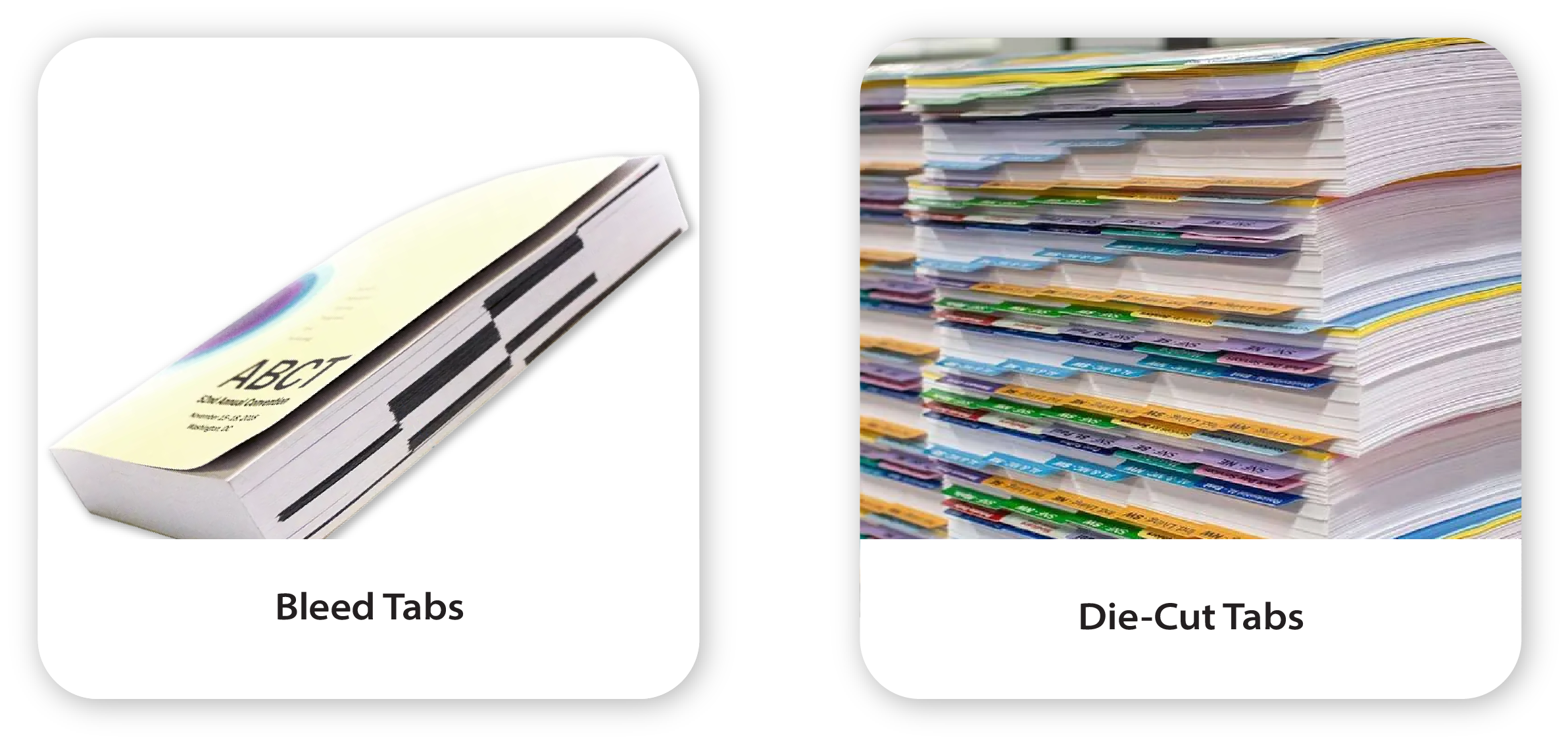
Bleed tabs are one of the two ways we solve that problem. Instead of adding physical tab pages that protrude past the edge, the section markers are printed directly into your existing pages so they bleed to the trimmed edge. When the planner is closed, those edges line up to form a stepped navigation system that customers can flip to by sight.
How Bleed Tabs Work
Each section in your design includes a color block, image, or label that extends all the way to the trimmed edge of the page. Some pages have the tab block in the upper right, others in the middle right, others toward the bottom right. When the book is stacked closed, those colored areas fall in different vertical positions and create a stepped pattern of color visible along the side of the closed product.
You have full design flexibility. Use solid color blocks, gradient fades, photographic imagery, section names set vertically, or numbered icons. The only setup requirement is that the artwork extends past the trim line by the standard bleed allowance so it survives the cut cleanly.
Bleed Tabs vs. Die-Cut Tabs
If you are deciding between bleed tabs and full die-cut tab dividers, the choice usually comes down to budget, durability, and the tactile experience you want.
Die-cut tabs are the premium option. They physically extend past the page edge and feel like a deliberate premium feature when held. They cost more per unit, take longer to produce, and they work best on specific binding types.
Bleed tabs are the streamlined option. They are part of the page rather than added to it, which keeps the production simple and the cost the same as any other interior page. Because nothing protrudes past the trimmed edge, there is nothing to bend, tear, or wear out from being shoved in and out of bags. They work across almost every binding style we offer, including perfect bound books, spiral bound planners, wire-o workbooks, hardcover books, and casebound journals.
Both options work. The question is whether the premium tactile feel of a physical die-cut tab is worth the additional cost for your specific product.
When Bleed Tabs Are the Right Choice
Bleed tabs work especially well for planners, journals, workbooks, coaching programs, training manuals, and educational materials. They are most useful when you have at least four to six sections customers will want to navigate between regularly throughout the year.
They also work well when you want the section markers to feel integrated into the design rather than added on top of it. A photographic-style bleed tab, for example, can carry the cover artwork through the interior in a way a separate die-cut tab cannot.
File setup matters. Bleed tabs need to extend past the trim line by the standard bleed allowance so they survive the cut cleanly. Our team will review your file before printing to confirm the tabs land where you expect them to, and our print specs cover the exact dimensions to use. View Print Specs
Ready to Start Your Project?
Whatever stage you are at, here is where to start.