Custom Flip Books & Pitch Books
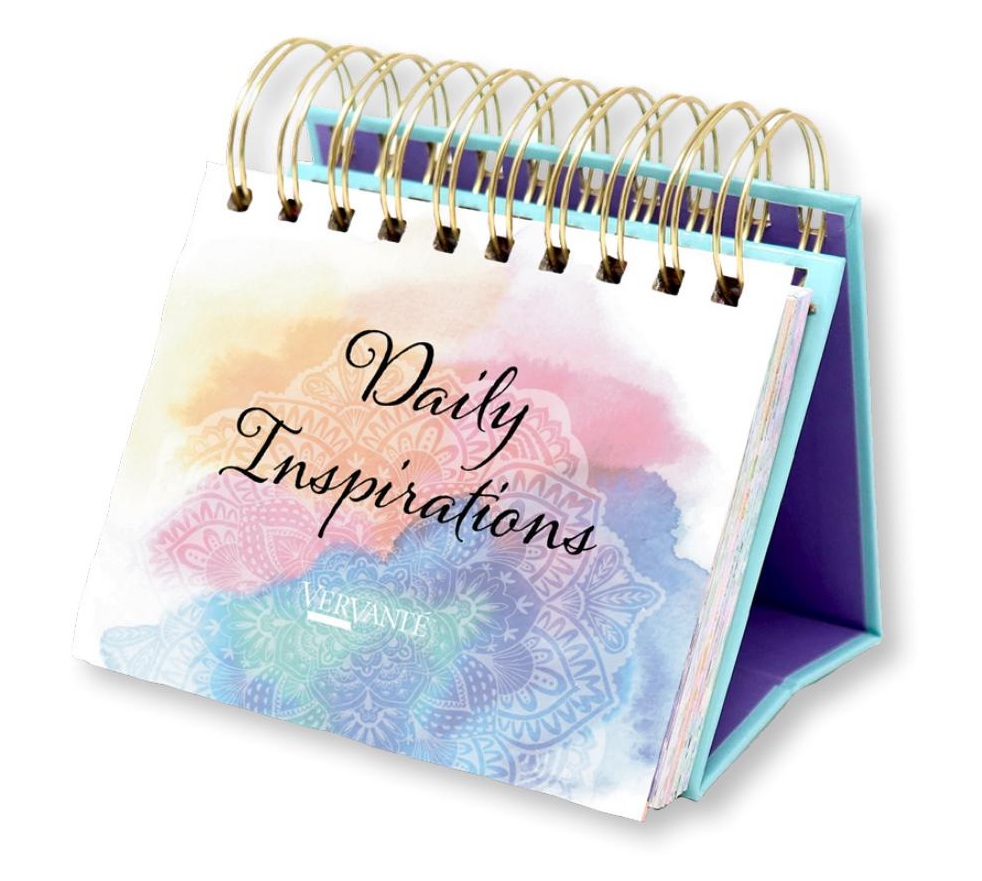
Easel stand format. Handcrafted in the USA. Softcover or hardcover base.
A flip book turns your content into a desk-friendly product customers actually use every day. The easel stand format opens to display one page at a time, sits on a desk, nightstand, or counter, and gets flipped to a new page or card each morning. It is one of the most satisfying physical products a creator can offer, and one of the most underused.
For 25 years, Vervante has been printing flip books, pitch books, and easel stand calendars for coaches, authors, speakers, sales teams, and wellness brands who want to put their content somewhere it gets seen and used. Every flip book is handcrafted right here in the USA from your print-ready files, with two production options to match your launch size and budget.
New to flip books? Read From Card Deck to Flip Book. How to Turn Your Deck Into a Desktop Product on our blog for a walkthrough of how creators are using this format.
Two Versions to Choose From
Flip books come in two base styles. The right one depends on your page or card count, your launch quantity, and how premium you want the product to feel in hand.
Version One
Softcover Base
An 18 pt board base for shorter flip books. The lighter base keeps cost down and lets you produce on demand, which means you can launch with a single copy and reorder as your audience grows.
- Best for: Flip books with fewer than 50 pages or cards
- Minimum order: No minimum. Print on demand.
- Production time: 3 to 5 business days
- Use cases: Affirmation flip decks, daily quote books, sales pitch leave-behinds, short devotional series
Version Two
Hardcover Easel Base
A traditional hardcover base for flip books that need to hold weight, stand up to daily handling, or position as a premium keepsake product. The heavier base is what most desktop calendar and devotional creators choose for retail launches.
- Best for: Flip books with 50 or more pages or cards
- Minimum order: 25 books
- Production time: 15 to 20 business days
- Use cases: Desktop calendars, year-long daily inspirations, keepsake flip decks, premium pitch books
Not sure which version is right for your project? Schedule a call and we will help you pick based on your page count, launch quantity, and price point.
Who Uses Flip Books
Flip books work across very different audiences because the format itself is what carries the value. A page that sits on a desk and gets flipped every morning is a daily touchpoint, no matter what content lives on it.
Daily Inspiration & Devotional Flip Books
Wellness coaches, spiritual creators, and devotional writers use flip books to put a daily message in front of their customers in a format that becomes part of a morning routine. Each page or card holds one quote, one prompt, one scripture, or one reflection. The format invites presence the way a digital reminder cannot.
Most daily inspiration flip books run 30 to 365 pages depending on whether you want a one-month, one-quarter, or full-year product. A full-year flip book typically uses the hardcover base; shorter series work well on the softcover.
Affirmation & Coaching Flip Decks
If you already sell a card deck, a flip book version is one of the most natural product extensions you can offer. The flip format takes the same content you already designed for cards and turns it into a desk-sized product customers display and use every day. Some creators sell the deck and the flip book as separate products. Others bundle them as a higher-priced gift set.
The flip book version works especially well for affirmation decks, coaching prompt decks, and short oracle decks where customers want a daily card draw experience without shuffling.
→ Read more on our blog: From Card Deck to Flip Book. How to Turn Your Deck Into a Desktop Product
Pitch Books & Sales Tools
Pitch books are a sales tool. Sales teams, financial advisors, real estate agents, and consultants use them to walk a prospect through an offer, a process, or a portfolio one page at a time. The format keeps the conversation focused on the page in front of you and signals more thought and craft than a printed slide deck or PDF.
Most pitch books use the softcover base because sales teams typically print smaller, more frequently updated runs. Custom branding on the cover, foil stamping, and printed end pages turn a pitch book into a leave-behind that prospects keep on their desk.
Desktop Calendars
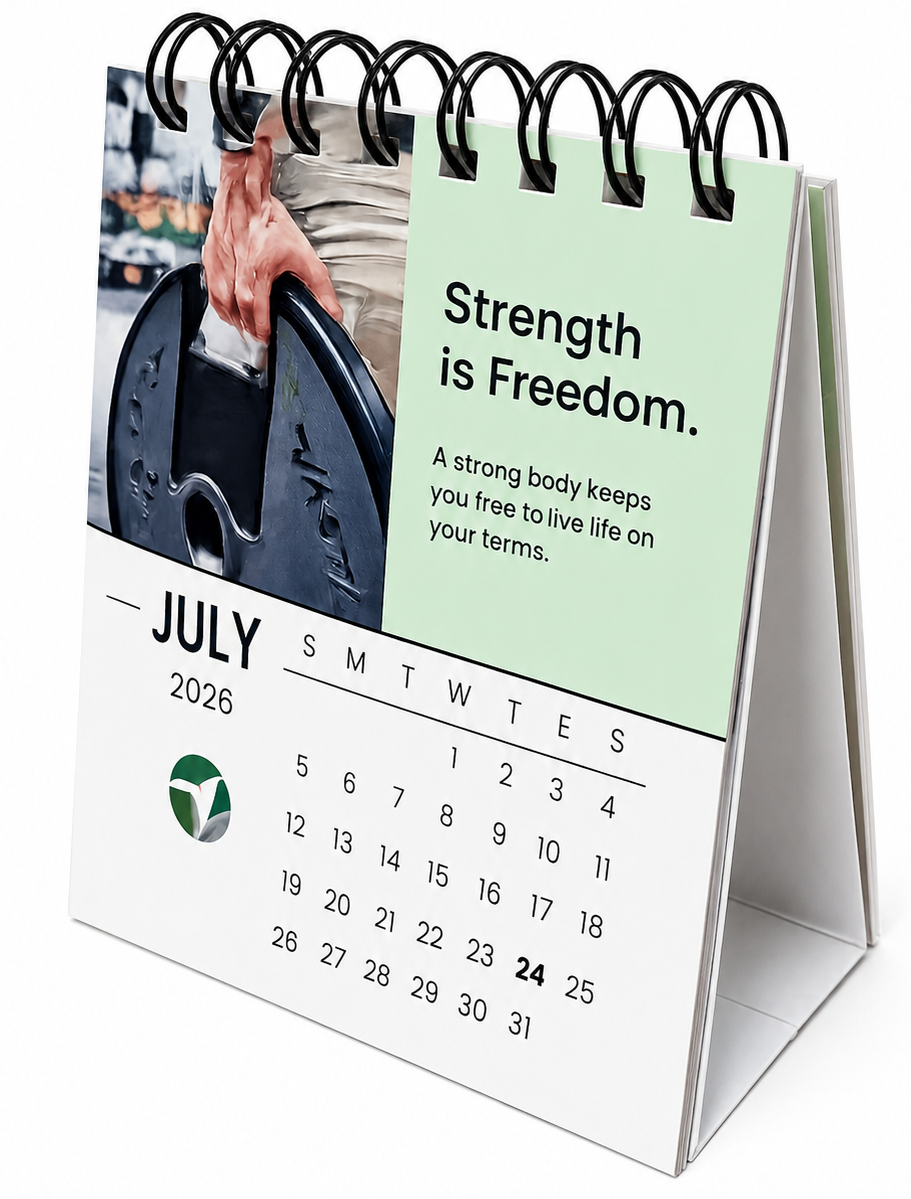
An easel stand calendar is the right form factor when you want a product customers see every day for a full year. Each page can pair a date grid with a photo, a quote, a tip, or a branded message. Fitness creators, motivational speakers, business coaches, and lifestyle brands all use the format to keep their voice in front of their audience long after the initial sale.
Most desktop calendars use the hardcover base for durability across a full year of daily flipping. 12-page (monthly) and 52-page (weekly) formats are the most common. Custom sizes let you match your brand or fit a specific space on a customer's desk.
Sizes, Page Counts & Specifications
Sizes
There is no set size for a flip book. You can match the size of an existing card deck for a deck-to-flip extension, choose a square 5 x 5 inch format for a desk-friendly affirmation product, pick a landscape 11 x 5.5 inch format for a wider calendar or pitch book, or specify a fully custom size. Smaller formats fit easily on a nightstand. Larger formats stand up to a desk or counter.
Binding
All flip books are bound with wire-o, which is what allows the pages to lay completely flat on the easel and flip cleanly from one page to the next. Wire-o color can be matched to your design (white, black, gold, silver, and other finishes available on request).
Page and card counts
The softcover base works best for flip books with fewer than 50 pages or cards. The hardcover easel base is the right choice once you cross 50 pages or cards. There is no hard upper limit. Year-long daily flip books at 365 pages are common.
Covers and finishes
The first page of your flip book functions as the cover. Foil stamping, full-color printing, and matching the cover to a companion card deck or guidebook are all options. For hardcover easel bases, the back base panel can also be printed or foil-stamped for premium positioning.
A Natural Companion to a Card Deck
One of the most common use cases for a flip book is turning an existing card deck into a desk-sized product. If you have already designed a 30, 52, or 64-card deck, the same artwork can be laid out as a wire-o flip book without redesigning from scratch. The deck and the flip book become two formats of the same product, and many creators sell both alongside each other.
This works especially well for affirmation decks, coaching prompt decks, daily reflection decks, and devotional decks where customers want to interact with the content in different ways. Some customers shuffle and draw. Others want the same prompt waiting on their desk each morning. The flip book serves the second audience.
For more on building a card deck product line, visit our Custom Card Deck Printing page or read our Complete Guide to Creating Custom Card Decks.
Warehousing and Fulfillment
Once your flip books are printed, we can store them in our secure Utah warehouse and ship orders directly to your customers as they come in, with your branding on the package. Whether you are selling through your own website, at live events, or through a course or coaching program, we handle the logistics so you can focus on the work itself.
Softcover flip books can be produced as orders come in (print on request), which means you do not have to carry inventory at all if you are testing a new product. Hardcover flip books are produced in batches starting at 25, then warehoused and fulfilled the same way.
Frequently Asked Questions
What is the difference between a flip book and a pitch book?
They are the same physical product used by different audiences. A flip book is most often referenced by wellness, devotional, and creator audiences. A pitch book is the same easel stand format used by sales teams, advisors, and consultants for client presentations. We print both from the same production process.
What is the minimum order quantity?
Softcover flip books have no minimum. We can produce a single copy on demand. Hardcover easel flip books have a minimum order of 25 books per design.
How long does production take?
Softcover flip books take 3 to 5 business days. Hardcover easel flip books take 15 to 20 business days. If you have a launch date or live event, tell us and we will plan around it.
What sizes can I order?
Any size. Common sizes include the same dimensions as a standard card deck (for deck-to-flip extensions), 5 x 5 inches (square), and 11 x 5.5 inches (landscape, common for desktop calendars). Fully custom sizes are available.
How many pages or cards can a flip book have?
The softcover base works best up to 50 pages or cards. The hardcover easel base handles 50 pages or cards and up, with no hard upper limit. Full-year daily flip books at 365 pages are produced on the hardcover base.
Can I make a flip book version of my existing card deck?
Yes. If you already have a card deck designed, the same artwork can be laid out as a wire-o flip book without redesigning from scratch. Many of our card deck customers add a flip book as a second product in the same line.
Can I order a printed proof before placing my full order?
Yes. We strongly recommend ordering a printed proof of your specific flip book before committing to a full hardcover print run. A printed proof is a physical copy of your actual book and lets you check the pages, the binding, and the easel base before scaling up.
Do you help with design?
No. We are a printer and fulfillment partner, not a design studio. You or your designer will need to provide press-ready PDF files. Our Print Specifications and Templates page includes specs and templates for many of our products, and our Helpful Resources library includes free downloads you can reference as you build your own.
Ready to Start Your Flip Book?
Whatever stage you are at, here is where to start.