The Complete Guide to Creating Custom Planners and Journals
For coaches, authors, speakers, and entrepreneurs ready to turn their ideas into a product they can sell
If you have ever thought about creating your own planner or journal, you are not alone. Planners and journals are one of the most popular and profitable physical products for coaches, educators, and entrepreneurs. They create a daily, ongoing connection between you and your customers that no digital product can replicate.
But with so many options to consider, including cover types, binding styles, paper choices, add-ons, and finishes, knowing where to start can feel overwhelming. This guide walks you through everything you need to know, from your first idea to a finished product ready to ship to customers. Whether you are creating your very first planner or upgrading an existing one, you will find clear, practical answers here. And if you have questions along the way, our team is always available to talk you through the decisions that matter most.
Jump to any section
Why sell a custom planner or journal? Step 1: Define your product concept Step 2: Choose your cover Step 3: Choose your binding Step 4: Choose your paper and interior Step 5: Add premium touches Step 6: Print, fulfill, and sell Frequently asked questions Ready to get started?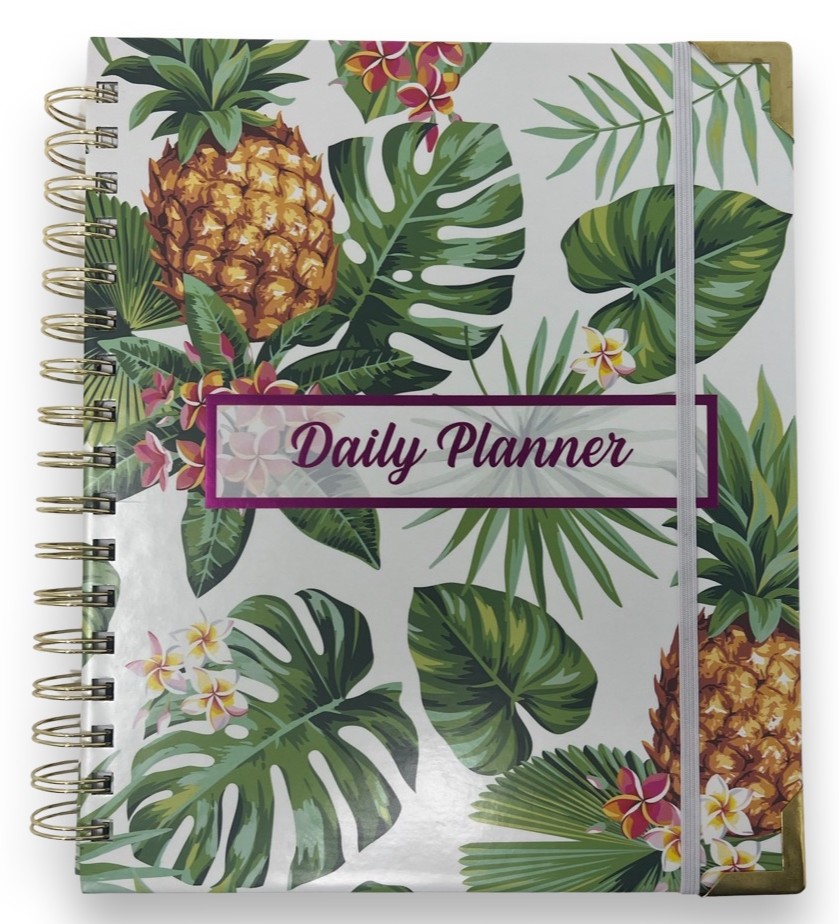
Why Sell a Custom Planner or Journal?
Physical planners and journals continue to grow in popularity even in a world full of apps and digital tools. Customers love them because writing by hand helps them think, plan, and reflect in a way that screens simply do not.
For creators, planners are an ideal product because they sell repeatedly. Customers who love your planner come back every year, or buy multiple copies to give as gifts. A well-designed planner is not just a notebook. It is a daily reminder of your framework, your voice, and your approach. They also command strong price points. A thoughtfully designed, well-made custom planner can sell for $30 to $75 or more, with healthy margins when produced through a quality print partner. And unlike fragile or oversized products, planners are simple to warehouse and fulfill.
The key is creating something that feels intentional. Not just a generic notebook with your logo on it, but a product your customers cannot find anywhere else.
01
Step 1
Define Your Product Concept
Before you think about covers or binding, start with purpose. The best planners and journals are built around a clear idea of who they are for and what problem they solve.
Start by asking yourself who this is for. Coaches, students, busy parents, entrepreneurs, fitness clients? What do they need to accomplish daily, weekly, or monthly? What is your framework or methodology that will shape the interior? Will this be dated (January through December) or undated so customers can fill in their own dates? And what size makes sense for how customers will use it. On a desk, carried in a bag, or tucked into a purse?
Common planner sizes at Vervante include 5.5" x 8.5", 6" x 9", 7" x 9", and 8.5" x 11". But the right size is not just about personal preference, it is about how your content actually lives on the page. A layout that looks beautiful at 8.5" x 11" can feel cramped and unusable at 5.5" x 8.5", so make sure whatever size you choose leaves your customers enough room to actually write. A good starting point is to look at planners you already own and love. Notice what works about the page size and what does not. When you are ready to decide, we can send you printed samples so you can feel the difference in hand before you commit.
Not sure where to start? Schedule a call with our team. We have helped thousands of creators through exactly this decision and we are happy to talk it through with you.
Want to offer more than one fixed product? With build-your-own planner production, you set the menu of covers, layouts, and add-ons and let your buyers configure the planner themselves. You design the options. We print and assemble each order on demand.
02
Step 2
Choose Your Cover
Your cover sets the first impression and it plays a huge role in how customers perceive the value of your product.
When it comes to covers, we generally steer customers away from softcovers for planners. They tend to curl or bend with daily use, which does not hold up well for a product your customers will reach for every morning. A much better option is a board cover, which gives you the rigidity and durability of a hardcover at a fraction of the cost and production time. Board covers are made by laminating multiple sheets of heavy cover stock together, and they come in three thicknesses: 24 pt (2-ply) for a solid, sturdy feel, 36 pt (3-ply) which is the sweet spot for most daily planners, and 48 pt (4-ply) for a truly substantial, hardcover-like experience. For most creators, a board cover is the smartest place to start.
Another popular choice, especially for wire-o and disc-punched planners, is our 10mil laminated cover. It is a durable, professional-looking option that holds up beautifully to daily use and pairs perfectly with both wire-o and disc binding. Many customers love it as a middle ground between a board cover and a full hardcover.
For the highest-end products, a traditional hardcover (casebinding) offers the most premium feel and longest durability, making it ideal for planners positioned as a keepsake or a flagship product in your lineup. Hardcovers are available with a printed cover, or in faux leather and linen materials that add a rich texture and hand feel that customers immediately associate with quality. These are the covers people run their hands over and cannot put down.
Board, 10mil, and hardcover all carry a 25-piece minimum, and for a long time that meant committing to 25 finished planners. It does not have to. With hardcover print on demand we produce your covers once, hold them in your inventory, and print and bind each interior as orders come in, so the 25 applies to covers rather than finished books.
For most coaches and entrepreneurs launching their first planner, a board cover or 10mil laminated cover strikes the best balance of durability, perceived value, and price. It feels substantial in hand and holds up to the daily use your customers will put it through.
Still not sure which cover is right for your product? Order samples and feel the difference for yourself. Or schedule a call and one of our specialists will walk you through the options based on your specific audience and price point.
→ Read more: Board Covers. A Durable Alternative to Softcovers and Hardcovers
03
Step 3
Choose Your Binding
Binding determines how your planner opens and lays flat, which directly affects how easy and enjoyable it is to write in. The wrong choice can frustrate customers even if everything else about the product is perfect.
Wire-o binding is one of the most popular choices for planners because it allows the book to lay completely flat when open, making it comfortable to write across the full spread. It also folds back on itself cleanly if customers want to use only one page at a time. For an even more polished look, concealed wire-o hides the binding mechanism behind the cover entirely. This is a subtle upgrade that makes a big difference in how finished the product looks on a shelf or desk, and one we highly recommend if your budget allows.
If your audience uses a disc-bound planner system like Levenger or Arc, we can punch your pages for disc binding so they drop right into the system your customers already love. And for hardcover planners and journals, Smyth sewn binding sews the signatures of the book together before casebinding, creating a beautiful lay-flat experience that feels truly handcrafted and premium.
04
Step 4
Choose Your Paper and Interior
The paper inside your planner matters more than most creators realize. Your customers will write in it every single day. If the paper bleeds through, feels flimsy, or does not hold ink well, it becomes a frustration they associate with your brand.
Heavier paper (70 to 80 lb text) resists bleed-through better and feels more substantial. Uncoated paper is generally better for writing, while coated stocks work well for pages with heavy printed imagery. Full-color interiors allow you to add color-coded sections, illustrations, and branded elements and are more affordable than ever.
When designing your interior, leave enough writing space. This sounds obvious but many first-time planner creators underestimate how much room people actually need. Include your branding consistently but subtly, think carefully about the flow from daily to weekly to monthly to reflection pages, and consider whether dated or undated pages make more sense for how your customers will use the product. Undated planners sell year-round and can be reprinted any time without going out of date.
05
Step 5
Add Premium Touches
This is where good planners become great ones, and where you can meaningfully differentiate your product from anything generic on the market.
Foil stamping on the cover in gold, silver, rose gold, or holographic is the single most impactful upgrade for perceived value. Customers notice it immediately, and it photographs beautifully for marketing. Embossing and debossing create a raised or recessed impression that makes the cover feel truly premium in hand. Board covers take either one. On a hardcover the design is debossed rather than embossed.
Inside the planner, custom printed tab dividers help customers navigate between sections at a glance. Paper pockets give them a place to tuck cards, notes, or loose pages, and they are available plain or fully printed front and back. A sewn-in ribbon marker means they will never lose their place, and an elastic strap keeps the planner closed and gives it that classic, European-style journal feel that customers love.
We also offer printed end sheets that turn the inside front and back cover into branded real estate, metal corners for an heirloom feel, a snap-in bookmark that clips to the cover, kiss-cut stickers, and perforated pages for tear-out sheets. Adding a QR code to your planner pages or packaging is also a great way to connect the physical product to digital content, such as bonus videos, a private community, or a resource library.
Start with the basics done well, then add one or two premium touches that align with your brand. Foil stamping and an elastic strap are the two add-ons that most consistently elevate a planner's perceived value.
Not sure which add-ons make sense for your product and your budget? Our team loves this conversation. Schedule a call and we will help you figure out exactly where to invest for the most impact.
→ Read more: Add Style and Function. Explore Our Pocket Options
→ Read more: The Value of Adding QR Codes to Your Products and Packages
06
Step 6
Print, Fulfill, and Sell
Once your design is finalized, Vervante handles the rest. We offer flexible print runs starting as low as 25 copies, so there is no need to overcommit upfront. Once your planners are printed, we store them in our Utah warehouse and ship individual orders on demand as they come in. Most creators start with a small batch to launch and test their market, then reorder as their sales grow.
Your planner can sell through your own website, your email list, at events, or through social media. We strongly encourage building your own direct sales channel rather than depending solely on third-party platforms, which can change their rules without warning. For more on why a custom planner sells better direct than in a marketplace, see Should You Sell Your Planner on Amazon?
Before you commit to a full print run, order a printed sample of your planner. Holding the actual product in your hands, feeling the paper, testing the binding, and seeing how the cover looks in real life often leads to small adjustments that make a big difference in the final product.
One thing that sets Vervante apart from other printing services is that you can schedule a call and speak directly with a real person on our team. Our publishing specialists have helped thousands of creators through every stage of this process. If you have questions about your files, your timeline, or your fulfillment setup, someone who knows the answers is always available.
Frequently Asked Questions
What is the minimum quantity I can order?
Vervante offers low minimums, as few as 25 books. With hardcover print on demand the 25 minimum applies to covers only, and each interior is printed and bound as orders come in. Contact us for a quote based on your specific product specs.
How long does production take?
Most orders are produced and ready to ship within 10 to 20 business days depending on complexity. Have a launch date or event? Tell us and we will plan around it.
What is a printed proof, and should I order one?
A printed proof is a physical copy of your finished planner produced from your own files. There is a charge for a printed proof, and the cost depends on your specific product, so ask us for a price. We strongly recommend ordering one before placing your full print run. Holding the actual product in your hands is the best way to catch any color, layout, or content issues before they print at full quantity.
Do you help with design?
No. We are a printer and fulfillment partner, not a design studio. You or your designer will need to provide press-ready PDF files for both the interior and the cover. To help you get started, our Print Specifications and Templates page includes specs and templates for many of our products, and our Helpful Resources library includes free planner downloads you can reference as you build your own.
Can you print workbooks for my course or coaching program?
Yes. Workbook printing is one of our specialties. Coaches and course creators come to us for retreat workbooks, program companions, certification training books, and signature course materials. Most workbooks pair well with wire-o or Smyth sewn lay-flat binding so students can write while the book is open.
What if I have questions I cannot find answers to?
Schedule a call with our team. Unlike most printing companies, you can speak directly with a real publishing specialist who will talk through your project personally. No ticket queues, no chatbots.
Ready to Start Your Project?
Whatever stage you are at, here is where to start.